
How Much Does a Campervan Cost? (2026 Buying Guide)
Is it Cheaper to Convert or Buy a Van?
When I first started dreaming about getting away from everything, I started thinking about getting a campervan. I wanted the freedom to travel, when I wanted and on my own terms. Buying a campervan seemed like the logical first step, but I had no idea how much a good campervan would cost. There are so many different makes, models and prices available it was incredibly difficult to nail down the answer to ‘How much should I pay for a Campervan?’
Over the years I learned that you could buy a second-hand campervan or even build your own for as little as £10,000, but this didn’t consider all the additional costs that came afterwards.
Campervans at this price have high mileage and are more at risk to problems occurring. Aside from mechanical wear or structural issues, old vehicles are particularly vulnerable to leaks and damp. The last thing you want is to be all tucked up only to find rainwater dripping into your bed. While this doesn’t completely rule out buying a campervan in this price bracket, one thing I have learned is to make sure any vans in this price bracket comes with a warranty.
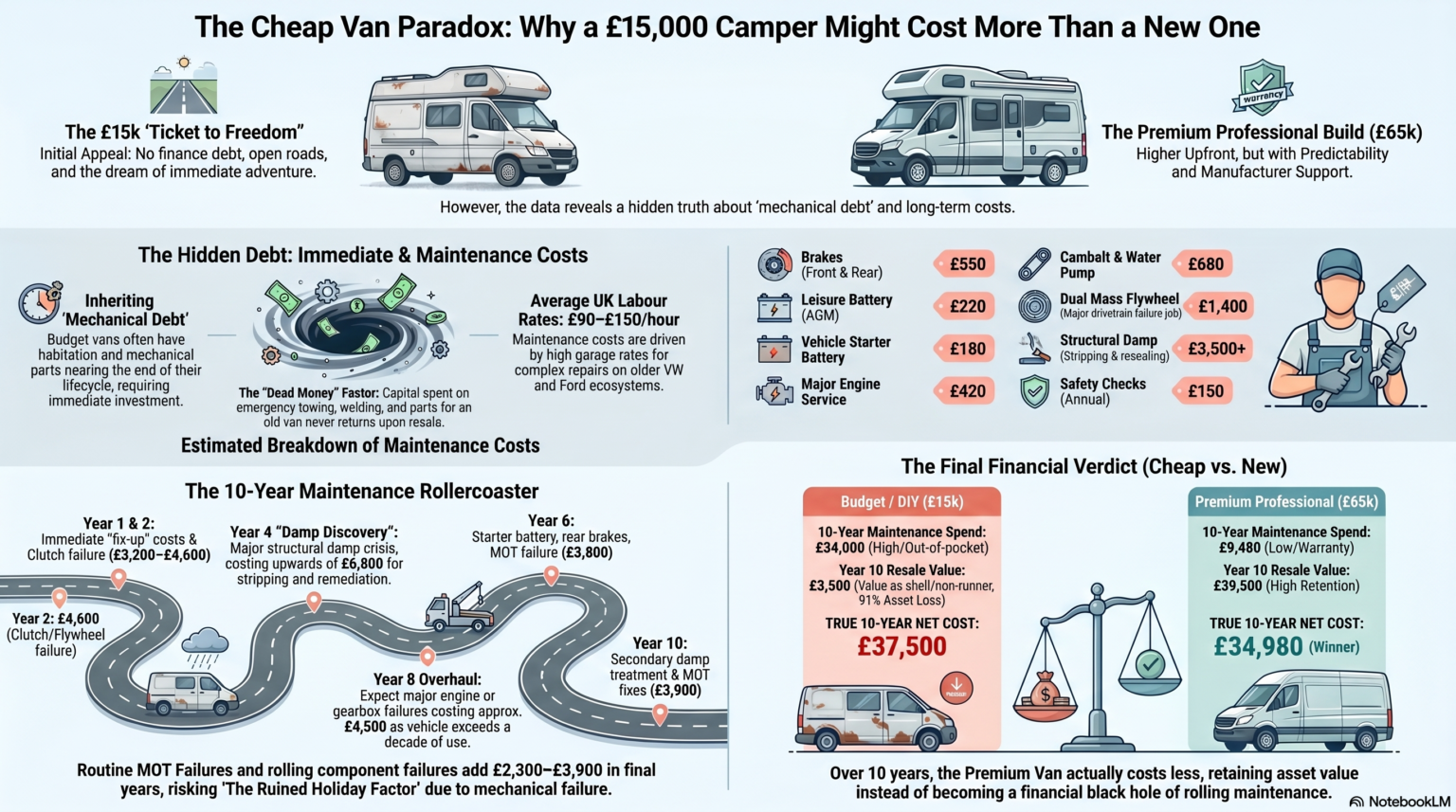
The mistake I made, is a common one. Once you have a campervan, if it has issues, you are stuck in a loop of continually spending money to keep the dream alive, instead of on traveling in comfort. Eventually holidays become a thing of dread or administrative nightmares and the campervan ends up rotting on the driveway.
Hidden Campervan Costs to Budget For
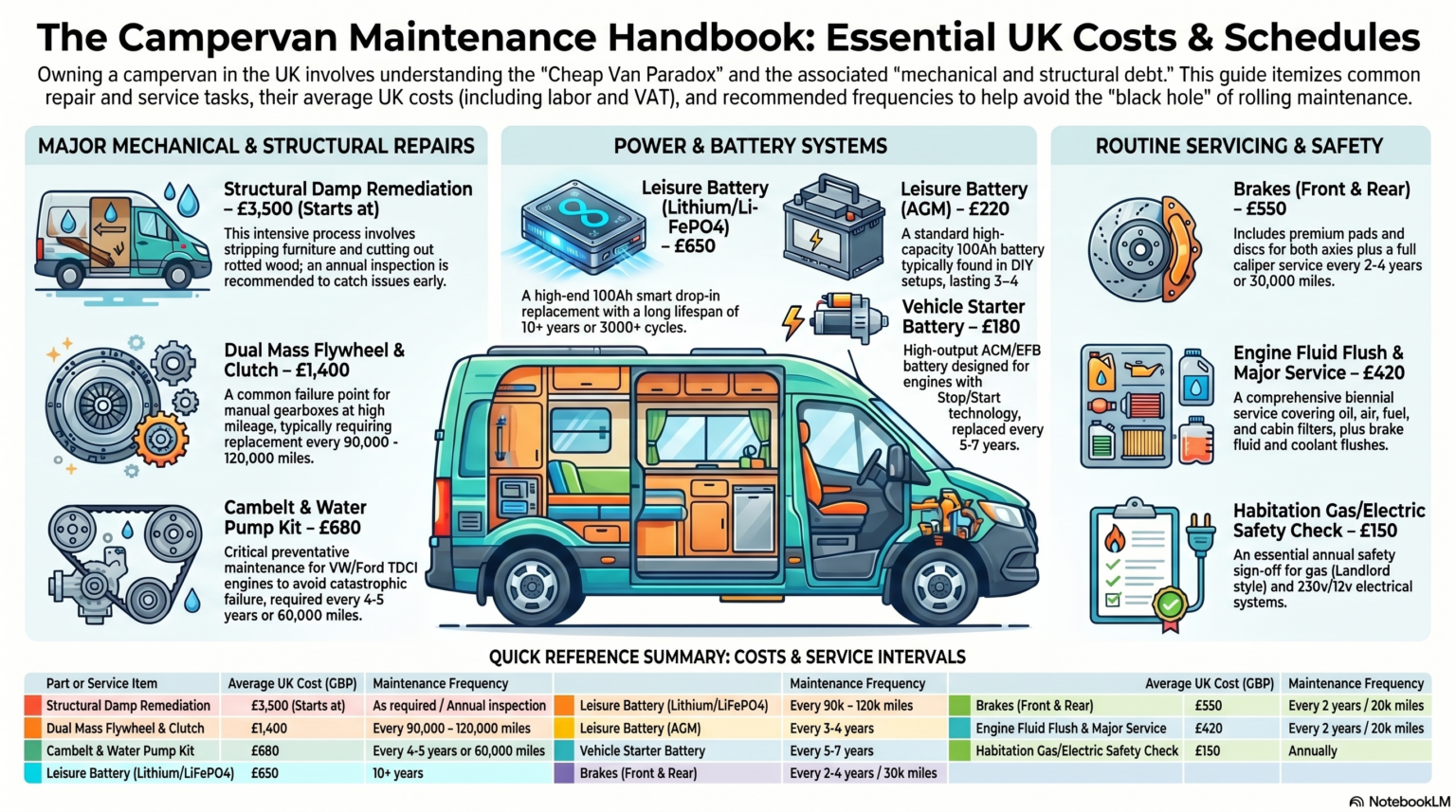
It might look like it’s cheaper to convert a van yourself, but all the hidden costs can quickly stack up. This means that while it is cheaper to convert for the first 3-5 years, after that it quickly becomes more cost effective to have bought a new campervan that has a warranty included.
If you do decide an older van is the right fit for you, make sure you set aside a few thousand pounds every year in case of emergencies. Here are some of the common costs we see on older or DIY built campervans.
What is the Average Price of a Campervan?
The average price of a campervan will obviously vary massively depending on the purpose. Below is a breakdown table of some average campervan price estimates:
| Condition | Typical Price Range | What You Get |
|---|---|---|
|
New (Factory) |
£65,000 – £95,000+ |
Brand new high-end coach-built vans with full warranties. |
|
Nearly New (1-3 yrs) |
£45,000 – £60,000 |
Modern tech, long-life and professionally converted “Pop-top” style vans. |
|
Used (5-10 yrs) |
£25,000 – £40,000 |
Reliable, well-maintained van with mid-life mileage. |
|
Budget/Older (10+ yrs) |
£10,000 – £20,000 |
Older models with higher mileage; may require more maintenance or modernizing. |
|
DIY Conversion |
£12,000 – £20,000 |
A used base van (£8k–£14k) plus conversion materials (£4k–£7k). |
For the most part, yes. Compared to a lot of other vehicles, campervans tend to be a solid investment. While a standard car will depreciate at around 15-20%, a campervan typically only loses 5-8% in its value.

If it depreciates then how is a campervan an investment?
A campervan is not just an investment into the vehicle or build; it’s considering the multiple financial benefits of embracing a campervan lifestyle. Most camper owners have made their campervan the sole vehicle and use it for months at a time, saving fortunes on travel and holidays.
You might lose some money off the initial purchase, but overtime they pay off. Even across a time period of 10 years, many campervans will maintain as much as 30-40% of their original price. It’s why campers are such a popular purchase for those retiring, you can enjoy travelling but still have something of worth to leave behind to children or grandchildren.
What makes a campervan a good or bad investment?
The biggest factor that separates whether a campervan is an investment or a liability is if the conversion is DIY or fitted by a reputable convertor. DIY builds can deteriorate faster, leading to possible safety concerns and van lower reliability.
While the vehicle aspect of the campervan might age, the living space can often be one of the most important aspects attributing to value. It can be refreshed and updated as time goes on, but if it’s a DIY build or significantly old then updating it becomes more expensive.
Brand new or Second-hand Campervan?
It’s one of the biggest conundrums I had when first looking at campervans, should I buy brand new?
Buying brand new definitely has several advantages. If you can afford it, it will mean you get to have a say over the vans design and layout. If you buy second-hand then you might have to settle over small details that the previous owners chose. This isn’t a problem if saving money is the priority, and buying a campervan that is a few years old can be financially rewarding.
Considerations Before Buying
There are a number of things to think about before making the exciting decision of purchasing your dream campervan.
How long do you want to use it for?
How far do you want to travel with it?
How many people will it need to situate?
Do you plan to bring any pets on your adventures?
When you think about these questions it becomes easier to narrow down on your options. If you only plan to have the van for a very short period of time, like a year or two, then a DIY or high-mileage second hand van might be the best option. However, if you want to travel long distances with peace of mind, a professional conversion might be more appealing.
Should I Buy a Van with a Toilet?
One thing I hear a lot from clients when they first visit Sussex Campervans, is that a built-in toilet is a must have priority. It was important to me as well. The privacy or your own WC is something that can feel essential when you first start considering your campervan options.
However, what many people don’t know is that the addition of a toilet can raise costs in a campervan considerably. Toilet installation requires large amounts of space, so a bigger vehicle is needed. It also needs a lot of specialised labour in order to ensure it is fitted correctly – you don’t want to be in the middle of a trip when you discover it’s leaking!
In total adding a toilet can cost anywhere between £1,500 and £2,800. In some cases this can even stretch to £5,000-6,000 if a dedicated washing area is needed.
Today many campsites have much cleaner and hygienic toilets than they did in the past. Their showers and washrooms can often be very pleasant. Finding somewhere to stop to go to the bathroom is often a straightforward process and many people find having a built-in-toilet isn’t that useful.
How Much Does it Cost to Run a Campervan Annually?
Purchasing a campervan is an exciting milestone, but the ongoing costs and maintenance that follow can sometimes feel a bit daunting.
To help ease that transition and ensure a smooth journey for the long haul, Sussex Campervans provides a complete support system designed for complete peace of mind. Owners have access to a dedicated aftercare team, a fleet of complimentary courtesy cars to keep travel plans on track, and a library of handy video guides for troubleshooting on the go. Backed by a robust, long-term warranty, this comprehensive support is structured to take the stress out of campervan ownership, allowing the focus to remain entirely on the road ahead and the memories yet to be made.
However, if you purchase elsewhere, you should be mindful of some of the following costs you could incur.
|
Cost Category |
Estimated Annual Cost (Range) |
Details & Reputable Sources |
|
Depreciation |
£1,500 – £3,500+ |
While campervans typically hold their value much better than cars, they still face depreciation. According to the AA, depreciation is highly contingent on keeping mileage low and documenting a full service history. A standard mid-range campervan can be expected to lose roughly 5% to 10% of its residual value annually in its mid-life phase.
Source: The AA – Car Running Costs and Depreciation Guidance |
|
Insurance |
£470 – £1,550 |
Specialist campervan or RV policies differ from normal van insurance because they factor in internal modifications and personal effects. Independent financial analysis by NimbleFins shows cheap baseline coverage averages around £470 for a VW campervan but can surge past £1,550 for high-end or luxury conversions (e.g., Auto-Sleepers) valued near £80,000.
|
|
Annual Maintenance, Servicing, and MOT |
£300 – £700 |
A campervan requires standard mechanical servicing (oil, filters, fluid checks) alongside its legal inspection. The maximum fee set by the UK government for a Class 4 vehicle MOT is £54.85. Mechanical maintenance ranges from £250 to £650 depending on whether it is an interim or major service and whether complex components (like water pumps or specialized tyres) require attention.
|
|
Road Tax (Vehicle Excise Duty) |
£171 – £360 |
For vehicles registered under Private Light Goods (PLG) status (most campervans under 3,500 kg), the standard rate is £360 per year for engines over 1,549cc. Heavier campervans registered as Private Heavy Goods (PHG) over 3,500 kg pay a flat rate of £171. If a factory-built motorhome had a list price exceeding £40,000 when new, an annual luxury vehicle supplement of over £400 may also apply for years 2 through 6.
Source: Caravan Times / DVLA – Road Tax Shake-Up and VED Rates |
|
Fuel |
£950 – £1,850 |
Based on traveling 5,000 to 8,000 miles per year, fuel consumption depends on whether the vehicle is a compact diesel or a heavier, fully laden coach-built model. Averaging 30 to 35 mpg at UK pump prices means a cost per mile of roughly 19p to 23p. The AA provides mathematical calculators to assess how fuel efficiency and driving styles aggregate into these final figures over the year.
|
|
Specialized Campervan Habits |
£550 – £1,500 |
This category isolates lifestyle costs: annual habitation checks (averaging £249 to inspect gas, electrics, and damp), gas canister refills (Calor/Campingaz), and campsite fees. UK campsite fees generally range from £20 to £45 per night depending on hookup requirements and season. If a dedicated off-street CaSSOA storage plot is required, it adds £350 to £1,200 annually.
|
|
Contingency / Emergency Repair Fund |
£500 – £1,000 |
A safeguard fund is recommended to mitigate unexpected failures not covered by basic breakdown assistance (e.g., leisure battery failure, electrical relay faults, or window/rooflight cracks). Consumer data from MoneySavingExpert notes that while comprehensive nationwide breakdown recovery can be secured for £60 to £150, fixing advanced internal leisure systems requires independent capital.
Source: MoneySavingExpert – Breakdown Cover and Emergency Preparedness |
How Much is a VW Campervan?
The classic Volkswagen campervan is a vehicle that provides many of us with a lot of fond memories. The VW has been the icon for campervan trips around the world for decades, and rightly so. The box shaped van design is eye catching and instantly noticeable. Potential buyers should be aware of the VW ‘nostalgia’ tax, as I like to call it.
Unfortunately, due to so many of wanting to own a VW, the price and value of the campervan models have caused the prices to remain high while other models go overlooked.
The Renault Trafic is one of my personal favourites to travel in. It’s spacious, reliable and incredibly fuel efficient. There aren’t many campervans that can go toe-to-toe with it for usability and comfort. While brand new these models can go from around £49,000-£60,000 if you wanted to get a similar design on a VW, you’d be looking at paying an additional £15-20,000.
The “VW Tax”: Why are VW Campervans More Expensive?
In the UK there aren’t as many VW campers available and so the price is artificially inflated. The other big factor that makes VW campervans significantly more expensive is that they do not offer discounts to convertors or dealerships. Other manufacturers will provide discounted products to convertors or dealerships, sometimes up to 30%, who can then provide their customers with a discounted price.
Will I save Money if I Go Electric?
If you have seen some of the recent tax grants and other benefits you can get from going electric, then perhaps it has been enough to tempt you to make the jump.
However before you make any big decisions, it’s important you understand the pro’s and con’s of going electric. There is a full breakdown in on our electric campervans page that you can read here.
Whether you decide to go with a classic VW, a fuel-efficient Renault Trafic, or a modern electric build, finding the right layout is key. Check out our live inventory at Sussex Campervans or book a showroom visit to speak with our conversion experts today.
Buying a Campervan UK
Before you buy a camper van make sure you are clued in with all the information you need. Our free buyers guide covers everything you need to know about finding the right campervan.